Race4Ayrton

Meet Ayrton

A family's race against time.

Happy. Incredibly sweet. And at almost 2 years old, Ayrton is quietly fighting a disease, SPG51, that is robbing him of neurons, the basic building blocks of the brain, and he is expected to become a paraplegic by 10 years old and a quadriplegic by 20 if nothing is done. His daily routine includes anti-seizure medicine and an array of lifelong therapies. Lifelong, because the disease will progress. All his hard work to learn to walk and talk will degrade before he becomes an adult.

Ayrton is still trying to find his words and his walk. He is determined and so are we. Advances in gene therapy have unlocked a world of hope for families like us.
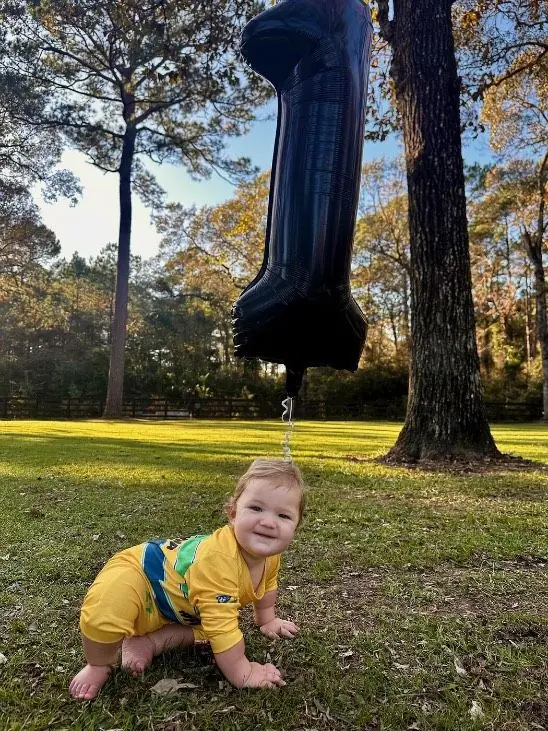
Ayrton, in a yellow and green racing outfit, crawling on the grass beneath a giant black number 1 balloon.

SPG51

Spastic Paraplegia 51 is caused by a mutation on the AP4E1 gene. Ayrton doesn't have the correct code to build the Y-shaped AP4 transporter protein. A protein that removes waste in nerve cells. Without it, nerve cells die.

Hope

Advances in gene therapy can give Ayrton's cells the correct code. But we have to work fast to stop the disease in its tracks, before it takes too much.

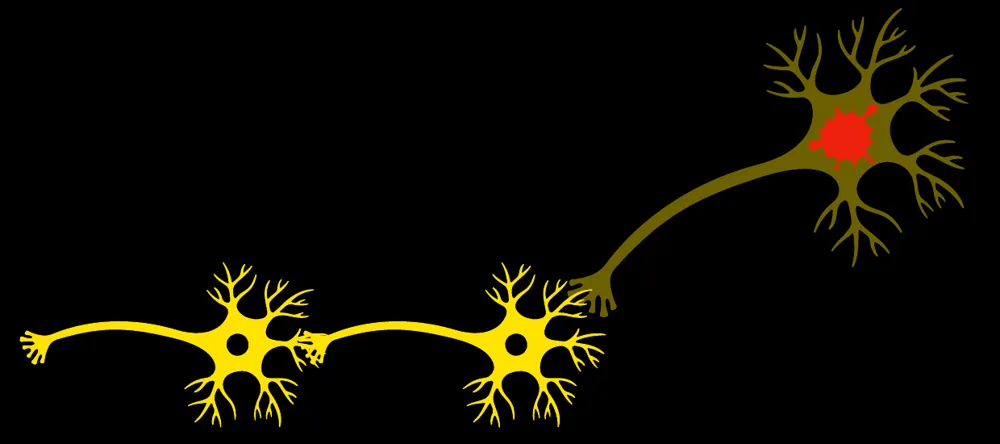
Illustration of a chain of healthy yellow neurons connected to a damaged neuron shown in dark gold with a red center.
AP4 hereditary spastic paraplegia is the result of a miscoded AP4 protein.
4 subtypes of AP-4 HSP exist: SPG47, SPG50, SPG51 and SPG52.
There are potentially only 4 known cases of SPG51 in the US, making it hyper-rare.
4 years old is about how old Ayrton will be when a clinical trial could begin, in February 2029, if the funding is there.
$4MM: it is estimated that the total costs will be $4-$5MM over the next 2-3 years to stop this disease from taking Ayrton and the other SPG51 children's mobility. There are even cases where mobility was restored after receiving the older & less effective technology gene therapy for SPG50.

What is gene therapy?

Scientists use modified viruses to carry correct genes into cells. Cells with the correct information make correct proteins and function properly. The technology is rapidly improving, and for some children the results are life changing.

The challenge

A therapy has been developed for SPG50, for instance, but it is of no use to Ayrton. Children with SPG51 need their own, specific therapy. That takes gene-specific research, toxicology testing and pharmaceutical manufacturing.

The research is already under way

At UT Southwestern in Dallas, Dr. Steven Gray's lab is developing a gene therapy built for SPG51. It pairs a healthy copy of AP4E1 with CapX, a next-generation delivery vehicle designed to reach neurons. In the lab's comparison, CapX transduced about half of neurons at a very low dose.

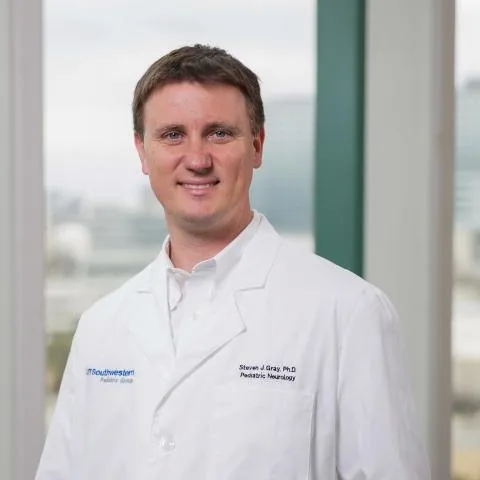
Portrait of Dr. Steven J. Gray in a white coat
Steven J. Gray, Ph.D.Professor, Department of Pediatrics
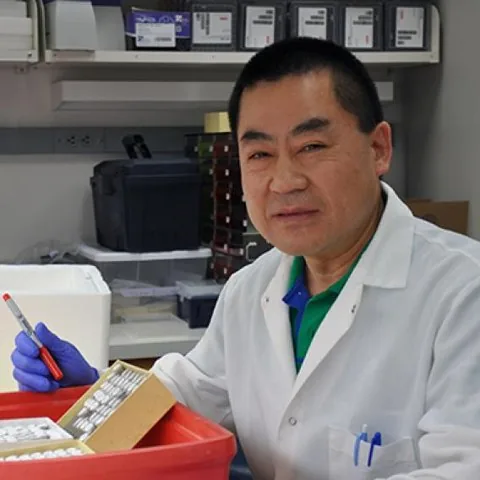
Portrait of Dr. Xin Chen in a white coat, working in the lab
Xin Chen, M.D., Ph.D.Assistant Professor, Department of Pediatrics
Aim 1

Build the gene

Design a plasmid carrying AP4E1 and confirm it makes the protein in human cells.

Aim 2

Test on patient cells

Prepare the CapX/AP4E1 vector and test it in cells donated by patients with AP-4 disease.

Aim 3

Prove it's safe

Dose mice at three levels and monitor safety and toxicity for up to 12 months.

Aim 4

Prove it works

In mice with the SPG51 mutation, track movement, strength and survival for up to 18 months.

The first two aims fill Year 1 (2026 to 2027). Mouse dosing, toxicity checks and the efficacy behavior tests follow in Year 2. The SPG51 mouse model comes from Dr. Bonifacino's team at the NIH.

Every step produces the data regulators need before a child can be treated, and each one moves the whole field of hyper-rare AP-4 diseases forward.

The road ahead

Rare disease research brings real costs, and none of it is covered by insurance. These are our current estimates for each stage between now and a clinical trial.

Right now: preclinical studies

The lab studies above need $495,164. This is the first funding gap, and every later stage depends on it.

  • $50,000already donated by a parent of another SPG51 child
  • $445,164still needed to fund the studies
  • NIH grantapplied for, to cover the Year 3 studies
  1. 12/2027

    UT Southwestern Research and Development

    Dr. Steven Gray's Lab Est. $495,164
  2. 2/2028

    3rd Party Safety & Efficacy Study

    $600K–$1MM
  3. 6/2028

    Gene Therapy Manufacturing

    $2MM–$2.5MM
  4. 10/2028

    FDA Investigational New Drug Application

    Request to begin human testing No cost listed
  5. 2/2029

    Clinical trial

    Giving the therapy to Ayrton and other families who apply $1MM–$3MM

Dates are targets and all costs are estimates. Ongoing treatment costs after the trial are still to be determined.

Time is not on our side

SPG51 is progressive. Without treatment, children face:

  • increasing muscle spasticity (tightening)
  • loss of mobility and communication
  • cognitive impairment
  • no independent life and greater care needs

The most promising gene therapies work best when given early. Every month without funding puts research timelines at risk, and is a month closer to Ayrton's disease progressing.

We are in a race

We are Ayrton's crew chiefs, but we aren't just working to cure Ayrton. We are on a mission to build a roadmap to cure more of the thousands of genetic hyper-rare diseases. The technology is built, but the cost and process to tailor it is substantial.

Every family facing one of these diseases deserves hope.

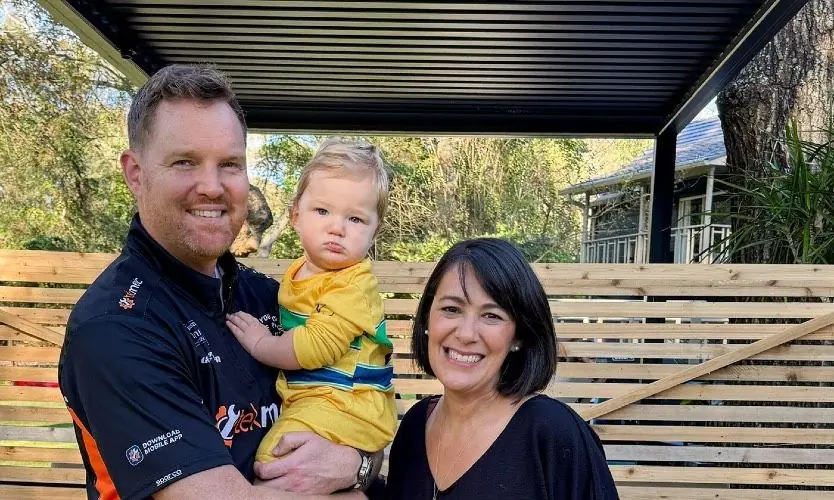
Ayrton's parents smiling with Ayrton, who wears a yellow and green racing outfit.

Help us reach the finish line. Donations are tax deductible.

Tax-deductible gifts to the Chilukuri Foundation, Inc., a 501(c)(3).

info@race4ayrton.com

(903) 353-1870